How PC Games Have Driven Software Innovation Through the Decades


How PC Games Have Driven Software Innovation Through the Decades
From the earliest arcade titles to today’s sprawling online worlds, PC games have done far more than entertain—they’ve consistently pushed the boundaries of software innovation. Many of the technologies that power modern computing, from advanced graphics to artificial intelligence, were first refined in the world of gaming. But how exactly have PC games shaped the evolution of software development over the decades?
From Pixels to 3D Worlds – The Graphics Revolution
In the 1970s and 1980s, games like Pong and Space Invaders were marvels of efficiency. Developers had to squeeze every ounce of performance out of limited hardware, pioneering optimization techniques that became foundational to software engineering. The drive to make games run faster and look better taught programmers how to write lean, efficient code—skills that remain essential across all areas of computing.
The 1990s brought the leap to 3D with titles such as Doom and Quake. These games introduced new ways to render space, light, and motion, laying the groundwork for modern 3D engines. Today, those same rendering techniques are used not only in games but also in architecture, film production, and even medical imaging.
Læs også:




Games as a Catalyst for Hardware and Programming Languages
Few industries have pushed hardware innovation as relentlessly as gaming. The demand for smoother graphics and more realistic simulations drove the development of the graphics processing unit (GPU). What began as a tool for rendering polygons is now a cornerstone of artificial intelligence, data science, and cryptocurrency mining.
Game development has also influenced programming languages and tools. C++ became a mainstay of high-performance software thanks to its use in game engines. Frameworks like Unity and Unreal Engine, originally designed for interactive entertainment, are now used in industries ranging from automotive design to virtual training. The need for real-time performance and flexibility in games has shaped the very tools that power modern software development.
The Online Revolution and Network Technology
When the internet became mainstream in the 1990s, games were among the first applications to truly test its potential. Multiplayer titles like Counter-Strike and World of Warcraft required robust networking protocols, server infrastructure, and security systems. The lessons learned from synchronizing thousands of players in real time helped pave the way for technologies that now underpin social media, cloud computing, and online collaboration tools.
The same principles that keep online games stable and responsive—low latency, distributed computing, and fault tolerance—are now essential in everything from video conferencing to financial trading systems.
Artificial Intelligence and Realistic Behavior
Early game AI was simple: enemies followed predictable patterns. But as players demanded more realism, developers created increasingly sophisticated systems. Games like The Sims and Halo introduced AI that could adapt to player behavior, make decisions, and simulate lifelike interactions.
These innovations didn’t stay confined to gaming. Many of the algorithms used in robotics, traffic management, and data analytics trace their roots to game AI research. Games provided a safe, controlled environment for experimenting with machine learning and adaptive systems long before those concepts became mainstream.
From Entertainment to Everyday Innovation
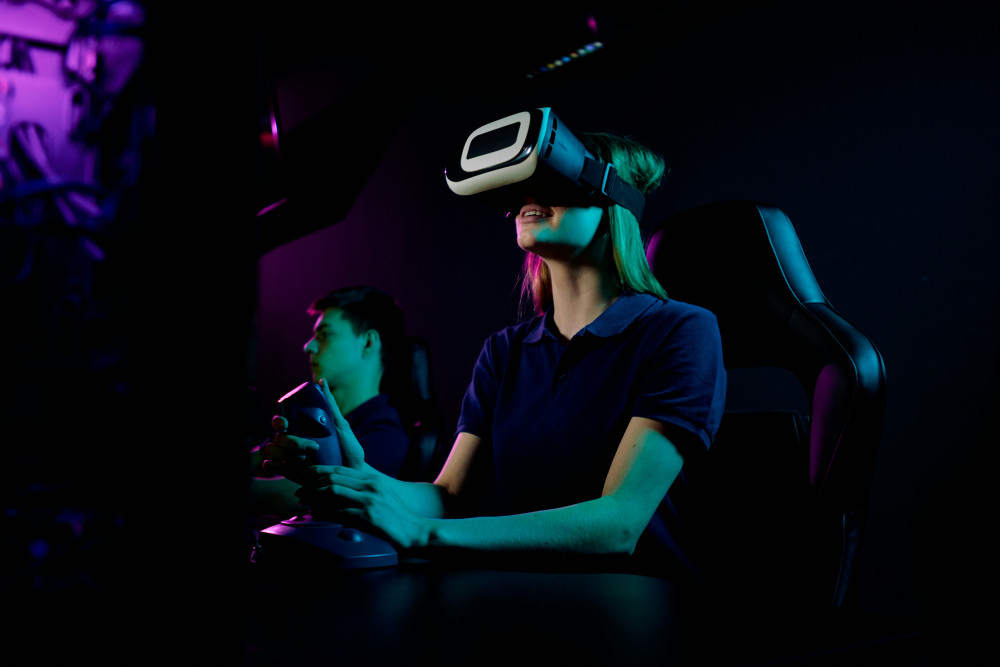
Today, the line between gaming and other software fields is blurrier than ever. Game technology powers education, healthcare, and business applications—from flight simulators to interactive learning platforms. Virtual reality (VR) and augmented reality (AR), once the domain of gaming, are now used in surgical training, industrial design, and remote collaboration.
Even the user experience of everyday apps—animations, feedback loops, and gamified interfaces—owes much to the gaming world’s focus on engagement and motivation.
The Future: Games as Laboratories for New Technology
The gaming industry remains a testing ground for emerging technologies. Cloud gaming, where titles are streamed from remote servers, is pushing the limits of data processing and network infrastructure. Meanwhile, advances in AI are enabling games that can adapt dynamically to each player—or even generate their own worlds.
It’s no exaggeration to say that many of tomorrow’s software breakthroughs will be born in the world of gaming. Every time developers strive to make a game more immersive, responsive, or lifelike, they’re also redefining what software itself can achieve.
Læs også: